
Professional & Amiable Guitar Tuition in Leeds. ™
Professional & Amiable Guitar Tuition in Leeds. ™
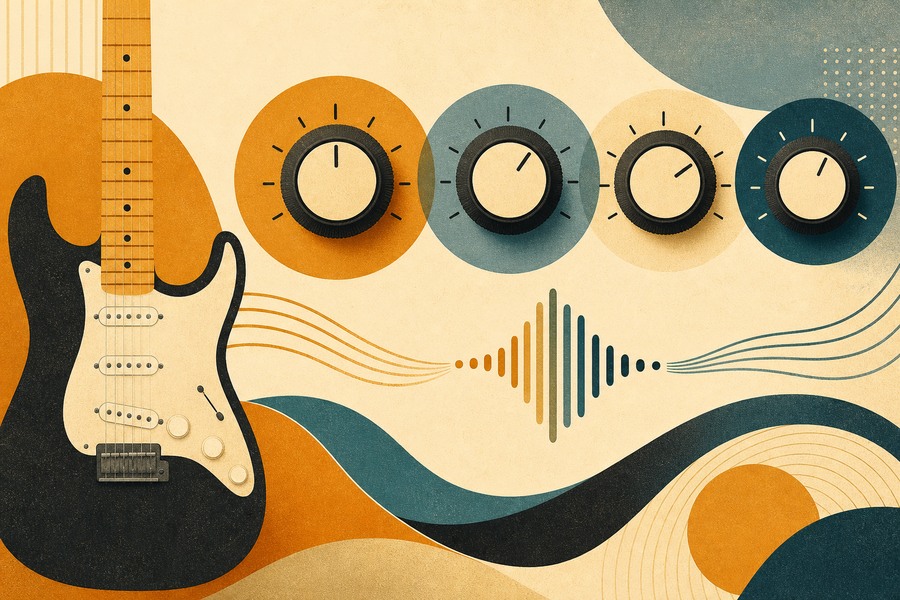
A beginner amp can look more complicated than the guitar. Gain, volume, bass, middle, treble, channel buttons and effects can all invite fiddling before you have played a note.
The best starting point is simple: get a clear sound at a sensible volume, then change one thing at a time so your ears learn what the amp is doing.
Choose the clean channel if your amp has one. Turn effects off for a few minutes. Set bass, middle and treble around halfway. Keep gain low and bring the volume up gently.
A clean sound makes mistakes easier to hear, which is useful when you are learning. Distortion can be fun, but it can also hide uneven fretting and extra string noise.
Practice volume should be loud enough to hear clearly and quiet enough that you can stay relaxed. If the amp is too loud, beginners often tense up or rush because the sound feels bigger than their control.
If noise at home is a worry, how to practise guitar without annoying neighbours gives practical ways to keep playing manageable.
Gain controls how hard the signal is driven. More gain gives grit, crunch or distortion depending on the amp. It also makes unwanted noise more obvious.
For early electric guitar, use just enough gain to enjoy the sound without turning every accidental string into a roar. If you are working on power chords for beginners, a little crunch can help, but too much can blur the rhythm.
Bass adds low-end weight. Treble adds brightness and bite. Middle affects body and presence. On a small practice amp, extreme settings often sound worse than simple halfway settings.
Try this: play the same chord while turning only the treble. Put it back to halfway, then try only the bass. Your ears will learn faster if you isolate one control at a time.
Online amp settings for famous players can be fun, but they rarely translate perfectly to your guitar, amp, room and hands. A preset cannot replace listening.
If you are new to electric guitar, the best way to learn electric guitar as an adult beginner is to build sound and technique together, not chase one perfect tone from day one.
Reverb, delay and modulation can make practice sound more enjoyable. Use them lightly at first. Too much effect can make timing less clear and hide whether notes are ringing properly.
If your rhythm feels shaky, strip the sound back and work with a metronome or count. How to use a metronome for guitar practice is a good companion here.
Amp settings should help you practise, not distract you from playing. Start clear, keep the volume sensible, and let your sound improve as your hands and ears become more confident.
If you've enjoyed this article, please share it!
Save time and learn faster with Mike. If you are based in Leeds, then I would be happy to help you to become your best at playing guitar.
Book a LessonI am a professional guitar teacher based in Leeds, UK. Having taught 500+ regular students over + years, I am confident that I have the relevant experience to help you to achieve your guitar playing goals & dreams.
Give the gift of music with MJP Guitar Tuition. If you are buying lessons as a present for someone, then our gift vouchers are the ideal solution for you. Learn more...

Copyright © MJP Guitar Tuition. All Rights Reserved.